Tiny Notes: A Handwritten Font That Feels Personal
There's something undeniably charming about handwriting. It carries a human touch, a sense of individuality that polished, perfect typefaces often lack. If you've been searching for a font that captures this authentic, handwritten essence for your projects, Tiny Notes might be exactly what you need. This cute, simple, and lettered handwritten font brings a delightful and personal quality to designs, making it a versatile tool for creators across many fields.
Understanding the Character of Tiny Notes
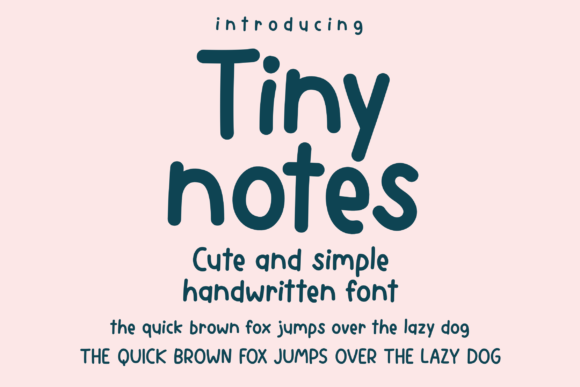
At its heart, Tiny Notes is a handwritten font designed to emulate the look of casual, friendly penmanship. Its visual characteristics are defined by slightly uneven baselines, gentle curves, and a natural flow that mimics real writing. Unlike overly stylized script fonts, Tiny Notes maintains excellent legibility. The letterforms are clear and distinct, avoiding the excessive ligatures or swashes that can sometimes make script fonts difficult to read at smaller sizes. This balance is key to its appeal—it offers personality without sacrificing function.
The overall style of Tiny Notes is approachable and warm. It feels like a note scribbled on a chalkboard, a friendly message in a card, or a quick annotation in a notebook. This makes it a superb creative font for projects aiming to establish a sense of sincerity, creativity, or hands-on craftsmanship. Its "lettered" quality suggests it was carefully drawn rather than digitally generated, adding to its authentic and personal feel. For designers and entrepreneurs, this typeface acts as a shortcut to injecting warmth and approachability into a brand's visual language.
Where Tiny Notes Truly Shines: Practical Applications
The real value of a font like Tiny Notes is in its application. Its strength lies in contexts where a human touch is desired. Let's explore where this premium font can be most effective.
Branding and Marketing Materials
For small businesses, especially those in artisanal markets, food, wellness, education, or personal services, Tiny Notes can become a cornerstone of a friendly brand identity. Imagine it used for:
- Logo Design: Paired with a clean sans serif font, it can create a logo that feels both professional and personal. Think of a bakery logo or a boutique consultancy.
- Packaging Design: On product labels, especially for handmade goods, it conveys care and attention. It works beautifully for ingredients lists, "Made with love" tags, or promotional stickers.
- Social Media Graphics: Instagram quotes, Facebook announcements, and Pinterest pins gain a relatable, engaging quality. It's perfect for creating social media graphics that stand out in a feed full of corporate-style fonts.
- Marketing Collateral: Use it for call-to-action phrases on flyers, headers on brochures, or personalized thank-you notes in email marketing to strengthen customer connection.
Editorial and Publishing Design
In the world of editorial design, Tiny Notes excels as a display element. It's not meant for body text in a novel, but it's fantastic for:
- Magazine Features: Pull quotes, section headers, or feature article titles in lifestyle, craft, or food magazines.
- Book Covers: Especially for genres like memoir, cozy mystery, children's literature, or self-help, where a personal narrative is central.
- Blog Design: As a header font for blog post titles or for highlighting key takeaways within an article, it adds visual interest and a personal voice.
Digital and Web Design
In web design, Tiny Notes can break the monotony of standard web-safe fonts. It's excellent for:
- Website Headers and Subheaders: To draw attention and set a creative tone, especially on portfolio sites or small business websites.
- Call-to-Action Buttons: A handwritten "Learn More" or "Join Us" can feel more inviting than a standard button.
- Testimonials: Displaying customer reviews in this font can make them feel more genuine and personal.
Personal and Craft Projects
For hobbyists and crafters, Tiny Notes is a gem. Its use in DIY projects is straightforward and rewarding:
- Chalkboard Art: As the font's name suggests, it's perfect for creating realistic chalkboard quotes for home decor or event signage.
- Scrapbooking and Card Making: Add heartfelt messages to handmade cards or journal pages.
- Teaching Materials: Create engaging worksheets, classroom labels, or educational posters that feel approachable and fun for students.
Integrating Tiny Notes into Your Design Workflow
Knowing where to use a font is one thing; using it effectively is another. Here’s some practical guidance for working with Tiny Notes.
Evaluating Project Fit and Readability
Always consider your primary audience and message. Tiny Notes is ideal for projects targeting adults 20–50 who appreciate creativity, authenticity, and a personal touch. It's perfect for conveying warmth, informality, and approachability. However, it may not be the best choice for highly formal, corporate, or technical documents where a serif font or neutral sans serif font conveys authority and clarity.
Readability is paramount. While Tiny Notes is more legible than many script fonts, always test it at the intended size and in the intended context. Use it for short bursts of text—headlines, quotes, callouts—not for long paragraphs. Ensure there is sufficient contrast between the text color and the background.
Mastering Font Pairings
The true power of a display font like Tiny Notes is unlocked through thoughtful font pairing. A common and effective strategy is to pair it with a clean, neutral typeface. For example:
- Tiny Notes + Modern Sans Serif: Pair it with a font like Montserrat, Open Sans, or Lato. The sans serif handles the body text, providing stability and readability, while Tiny Notes adds personality to headings and highlights.
- Tiny Notes + Classic Serif: Combine it with a timeless serif like Lora or Merriweather. This pairing can create a beautiful contrast between traditional elegance and handwritten charm, suitable for editorial projects.
Avoid pairing it with other highly decorative or handwritten fonts, as this can create visual clutter and confusion.
Understanding Licensing and Usage
Before using Tiny Notes in any commercial project—from client work to products for sale—it is crucial to review the font's licensing. Most premium font licenses are clear: they typically allow for use in digital and print projects, but may have restrictions on redistribution or use in certain types of templates for resale. Always purchase the appropriate license (often a "desktop" or "webfont" license) from the original source. This ensures you are legally covered and supports the type designers who create these valuable design assets.
In the vast landscape of modern typography, finding a font that feels both distinctive and usable is a win. Tiny Notes offers that rare combination. It’s a handwritten font that doesn’t compromise on clarity, making it a practical and charming addition to any designer's toolkit. Whether you're building a brand, designing marketing materials, or crafting a personal project, its authentic letterforms can help you communicate with a genuine, human voice. Give it a try in your next project and see how a touch of handwriting can transform your message.